
 English
 Español
 عربى
عربىThe Plastic Thin Space Cup Mould represents an innovation in the manufacturing o...

-

+86-15068654601
-

No.62 Zhao Feng Road, Huangyan, Taizhou, Zhejiang, China
+86-15068654601
No.62 Zhao Feng Road, Huangyan, Taizhou, Zhejiang, China
Bottled Water and Beverage Industry
The largest application sector for plastic water jug moulds. Injection moulds produce small to medium jugs (0.5 to 5 liters) for retail distribution. Blow moulds produce large jugs (5 to 20 liters) for water coolers and office dispensers. Production volumes in this sector require moulds with high cavitation—up to 32 or 64 cavities for small bottles—to achieve the necessary output rates. Moulds for this sector typically incorporate hot runner systems to minimize gate marks and improve aesthetic appearance.
Household and Consumer Goods
Water jugs for home use—including refrigerator containers, camping jugs, and beverage dispensers—are produced using injection and blow moulds. This application emphasizes design features such as ergonomic handles, measurement markings, and lid sealing surfaces. Moulds for consumer goods often incorporate features such as unscrewing mechanisms for threaded caps and lifter systems for undercuts. Surface finish requirements are typically higher than industrial applications, requiring polished cavity surfaces.
Food and Beverage Processing
Large-capacity jugs used in food service establishments, commercial kitchens, and beverage dispensers fall into this category. Moulds for these applications must produce containers that meet food safety regulations. Cavity surfaces are polished to facilitate cleaning and prevent bacterial harborage. Materials processed are typically FDA-compliant grades such as polypropylene (PP) or high-density polyethylene (HDPE). Moulds for this sector often incorporate inserts for embossing lot numbers, manufacturer information, and capacity markings.
Medical and Laboratory
Water jugs used in medical facilities, laboratories, and pharmaceutical settings require specific mould designs. These jugs often feature sterile seals, tamper-evident features, and precise volume measurements. Moulds for medical applications are typically constructed from stainless steel to resist corrosion from sterilization processes. Cavities are polished to mirror finishes to prevent material adhesion and facilitate cleaning between production runs. Production requires validation protocols that mould designs must accommodate, including consistent shot-to-shot repeatability.
Industrial and Chemical
Heavy-duty jugs for storing and dispensing industrial chemicals, cleaning solutions, and agricultural products represent a distinct application category. Moulds for these jugs are designed with thicker wall sections to withstand chemical exposure and handling stresses. Materials processed include high-molecular-weight polyethylene (HMWPE) for impact resistance. Mould features may include reinforced handle areas, stacking ribs for palletization, and standardized bung fittings for dispensing equipment.
Reusable and Eco-Friendly Products
The growing market for reusable water containers has created demand for moulds that produce durable, washable jugs. These applications emphasize material selection—such as Tritan copolyester or polypropylene—and design features that facilitate disassembly for cleaning. Moulds for reusable jugs incorporate precise shut-off surfaces for sealing interfaces and may include collapsible cores for undercuts such as integrated carrying handles.
Components of a Plastic Water Jug Mould
Mould Base. The foundational assembly. Consists of clamping plates, support pillars, and guide pins. Provides structural integrity and aligns with the injection molding machine.
Cavity. The hollow space that forms the outer surface of the jug. Machined from steel or aluminum. Surface finish determines the jug's appearance.
Core. Forms the inner surface of the jug. Mounted opposite the cavity. Cooling channels run through the core to remove heat.
Sprue Bushing. The entry point for molten plastic from the machine nozzle. Directs material into the runner system.
Runner System. Channels that distribute molten plastic from the sprue to the cavities. Hot runner systems maintain material in a molten state. Cold runner systems solidify and are ejected with the part.
Gate. The opening through which molten plastic enters the cavity. Gate type affects part appearance and weld line formation. Common types include edge gates, fan gates, and diaphragm gates.
Ejection System. Removes the finished jug from the mould. Consists of ejector pins, ejector plates, and return pins. Positioned to avoid visible marks on the jug surface.
Cooling System. Channels machined into the mould plates. Circulates water or oil to control temperature. Even cooling reduces cycle time and prevents warpage.
Venting. Narrow channels that allow air to escape as plastic fills the cavity. Prevents burning and incomplete filling. Typically 0.01 to 0.03 millimeters deep.
Guide Components. Guide pins and bushings maintain alignment between mould halves. Ensure consistent parting line closure and component alignment.
Slides and Lifters. Mechanisms that form undercuts, such as handle openings or lid retention features. Move laterally before the mould opens. Actuated by angled pins or hydraulic cylinders.
Thread Mechanism. Forms threaded openings for caps. May include unscrewing devices with rotating cores or collapsing inserts for larger threads.
Heaters. Maintain temperature in hot runner systems. Thermocouples provide feedback for temperature control.
Limit Switches. Confirm proper mould closure and slide positioning. Interlock with machine controls to prevent operation when components are not fully seated.
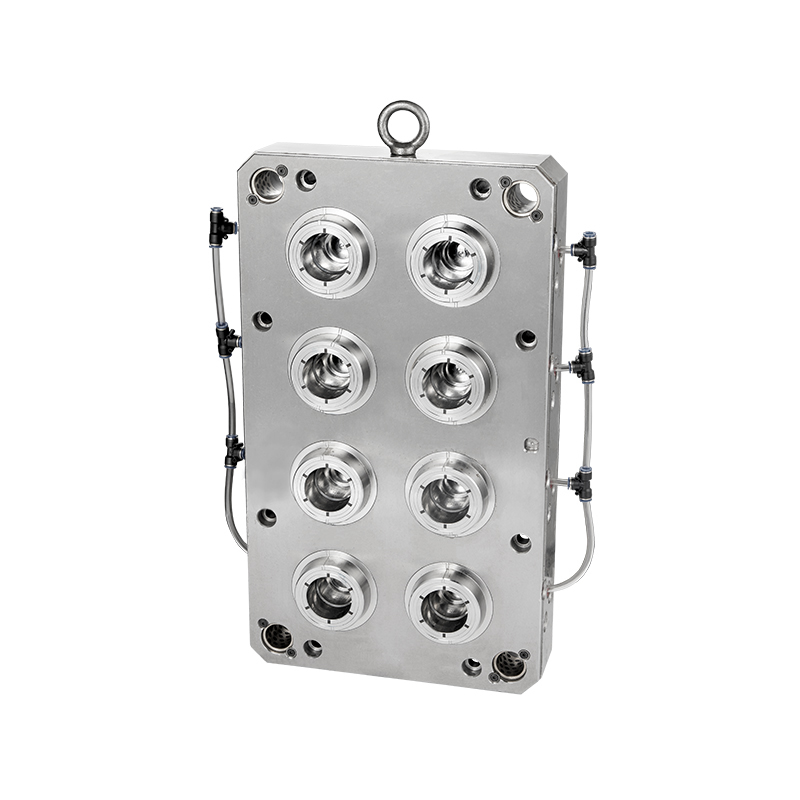
The Plastic Thin Space Cup Mould represents an innovation in the manufacturing o...
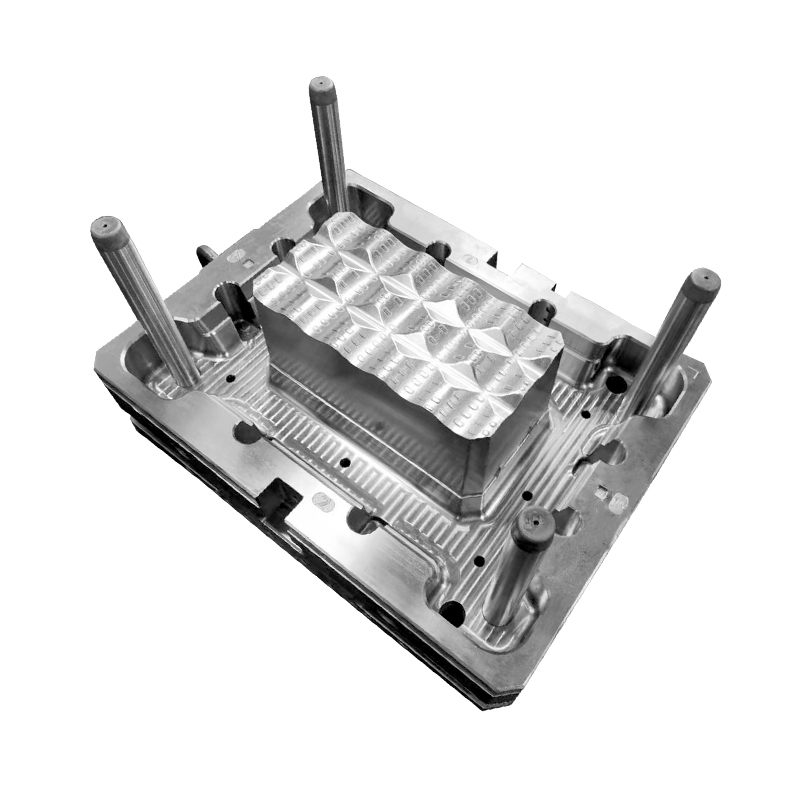
Our Food/Beverage Plastic Crate Mould is meticulously designed to meet the diver...
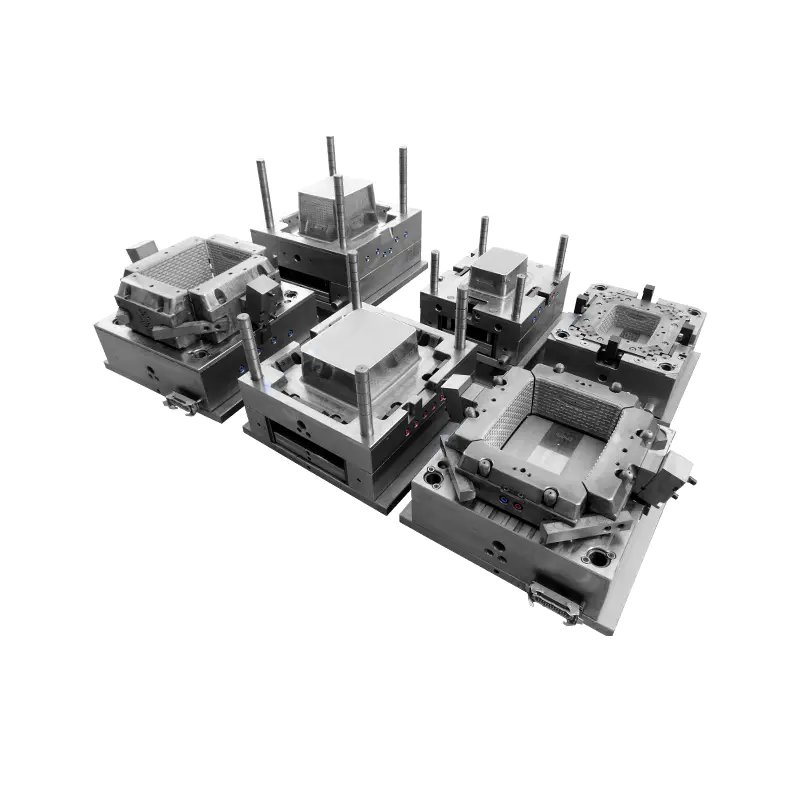
In the realm of plastic furniture storage solutions, our injection mould stands ...
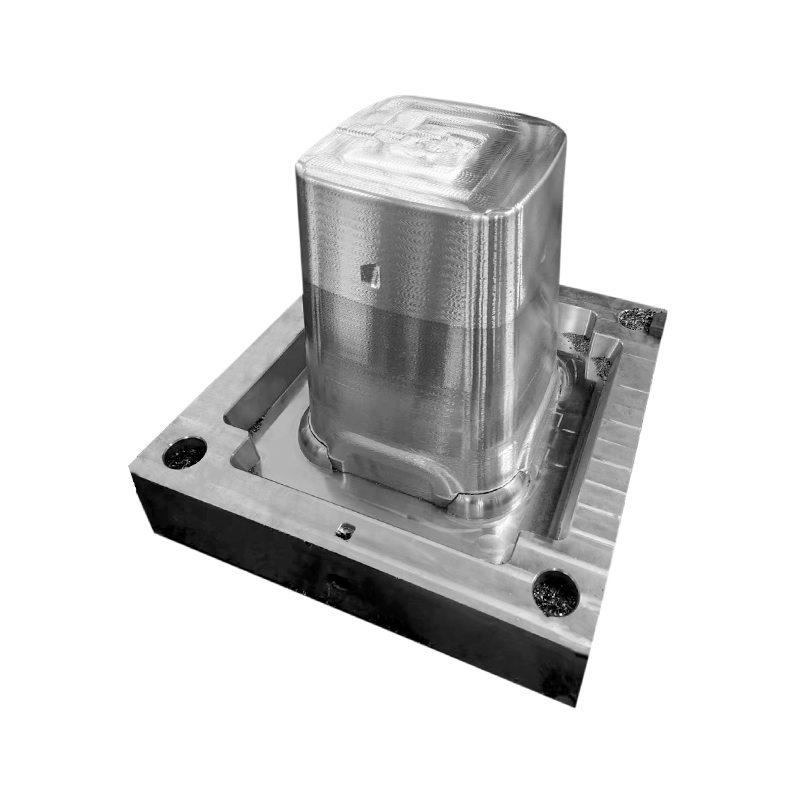
In the realm of contemporary furniture design, the Durable Plastic Rattan Stool ...
Taizhou Huangyan Edge Mould Co., Ltd.
Phone: +86-15068654601
Email: [email protected]
Address: No.62 Zhao Feng Road, Huangyan, Taizhou, Zhejiang, China
Copyright © Taizhou Huangyan Edge Mould Co., Ltd. All Rights Reserved.
